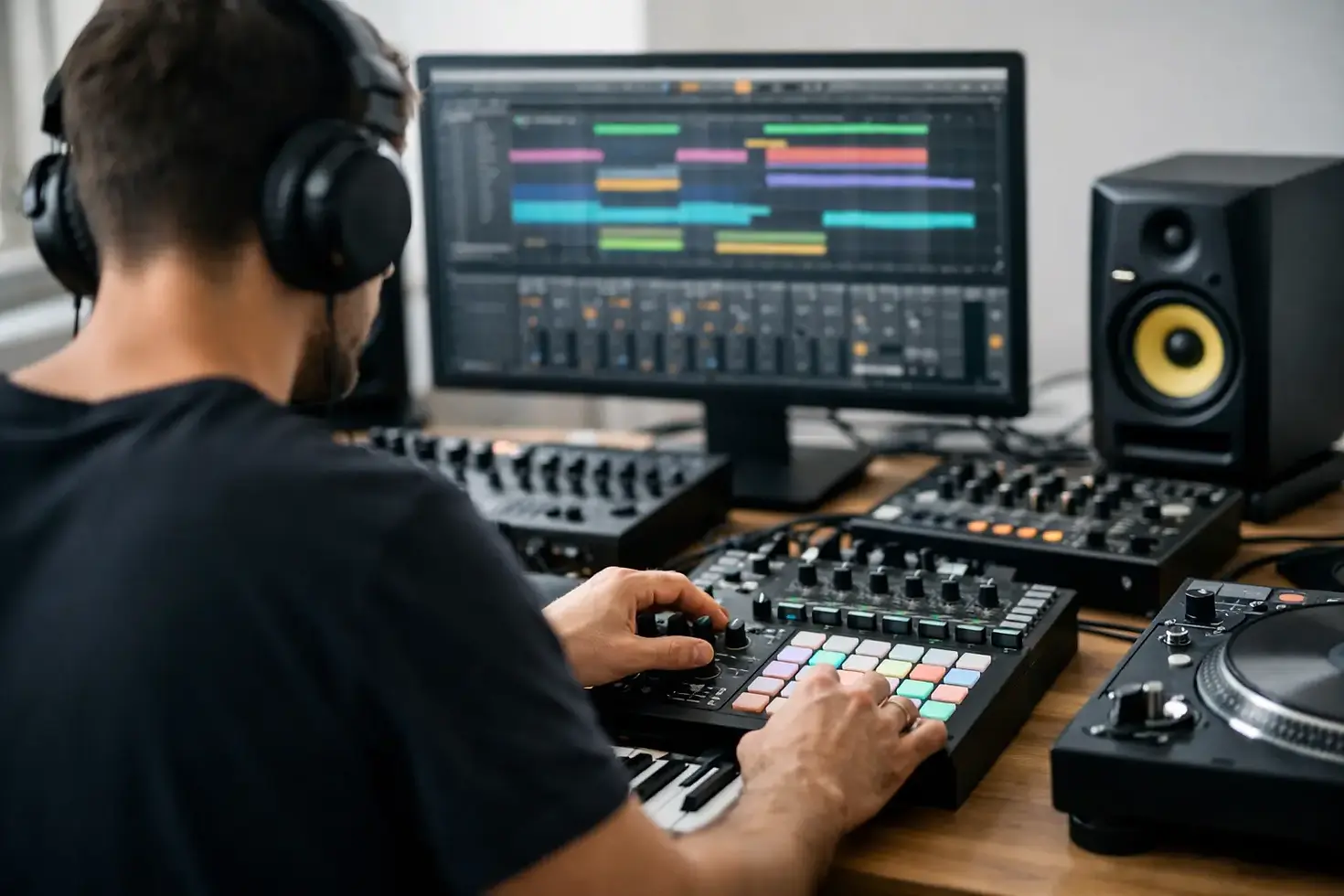
How to Learn House Music Production Well
The first time a proper house record clicks, it is rarely because of a plugin or a studio trick. It is usually the feeling - that lift in the chords, the pulse in the kick, the swing in the hats, the sense that a room full of strangers could suddenly move like one body. If you are asking how to learn house music production, start there. Not with gear lust, not with endless tutorials, but with the reason this music has lasted from late nights in Manchester to sunlit mornings in Ibiza.
House is simple on the surface and unforgiving underneath. Four-to-the-floor looks easy until you try to make a loop breathe for six minutes without losing energy. That is why the best way in is not to chase complexity. It is to learn the foundations deeply enough that even the plainest beat carries soul.
How to learn house music production without getting lost
Most beginners make the same mistake. They try to learn everything at once - synthesis, mixing, mastering, arrangement, DJ culture, music theory, social content, branding. That is too much, and it blurs the one thing that matters early on: finishing music.
A better route is to treat house as a language. First learn the rhythm. Then learn the emotional vocabulary. Then learn how records are structured to hold a dancefloor. You do not need the fanciest setup for this. A laptop, a DAW you can commit to, a pair of decent headphones or monitors, and a small collection of sounds is enough to begin.
Pick one DAW and stay loyal to it for a while. Ableton Live is popular for electronic music for good reason, but Logic, FL Studio and Bitwig can all get you there. The wrong move is jumping between platforms every few weeks, hoping the software will fix what only practice can fix.
The same goes for sounds. A tight house kick, a few classic drum machine samples, a simple bass patch, a piano or organ tone, and some bright, dusty percussion can take you surprisingly far. Limits help. House was built on limitations as much as inspiration.
Listen like a producer, not just a fan
If you want to know how to learn house music production properly, spend as much time listening with intent as you do making loops. Go back to records with history in them. Listen to the groove in old Chicago and New York cuts. Listen to the warmth and uplift in Balearic and piano house. Listen to the tension in deeper club records that hold back before they bloom.
When you study a track, ask very plain questions. Where does the bass actually enter? How often does the clap pattern change? Is the main hook carrying the record, or is it the chord progression underneath it? Does the vocal lead the emotion, or simply colour it?
This matters because house is rarely about one dramatic moment. It is about small, clever shifts. An open hat introduced at the right time can do more than a huge synth stack. A filtered chord returning after a breakdown can feel bigger than a dozen new parts.
Reference tracks are not there to copy. They are there to train your instincts. One of the best habits you can build is to place a favourite house record beside your own work and compare energy, low end, arrangement and movement. It keeps you honest.
Build the groove before the gloss
A lot of new producers want their music to sound polished before it sounds alive. That is backwards. In house, groove comes first.
Start with kick, clap or snare, hats and percussion. Make a loop that feels good enough to stay with for several minutes. If it feels stiff, it probably is. Adjust timing slightly. Change velocity. Remove notes instead of adding more. Space is part of the rhythm.
Then add bass. In house, bass is not there to show off. It locks with the kick and gives the track its body. Often the strongest basslines are the simplest, especially early on. One or two notes played with confidence will beat a busy pattern that fights the drums.
Only when the rhythm section is carrying weight should you move to chords, stabs, pads or lead parts. Classic house lives in that relationship between rhythm and harmony. The chords bring the emotion. The drums make it physical. If either side is weak, the record will feel unfinished no matter how good your mix is.
Learn arrangement by finishing rough tracks
There is no shortcut here. You learn arrangement by arranging.
House structure is built on tension and release, but the exact shape depends on what kind of house you are making. A piano-led, uplifting track might want quicker pay-off and bigger emotional peaks. A deeper late-night roller may develop more slowly and reward patience. Neither approach is better. It depends on the mood, the crowd and your artistic point of view.
A useful discipline is to finish one sketch every week, even if it is rough. Not every track deserves perfection. Some tracks are there to teach you intros. Some are there to teach you breakdowns. Some are there to teach you that the hook you loved in isolation does not actually carry a full arrangement.
That is all part of it. You are not failing when a track falls short. You are building taste.
How to learn house music production with the right influences
The strongest house producers usually have a clear sense of lineage. They know what moved them before they ever opened a DAW. That does not mean making museum pieces. It means understanding why this music still lands.
If your heart is in the Haçienda spirit, in those emotional pianos, rolling grooves and sunrise melodies, lean into that honestly. Do not flatten your taste to fit whatever is trending for ten seconds on social media. Trends can be useful for context, but they are poor foundations for identity.
At the same time, nostalgia on its own is not enough. A track still needs to feel present. That might come from cleaner drum balance, sharper low end, a more restrained arrangement, or simply knowing when to leave something raw. Heritage gives you roots. Your decisions give it life now.
That balance matters if you want longevity. Audiences can hear when someone loves the culture and when someone is merely borrowing the costume.
Tutorials help, but making records helps more
There is nothing wrong with learning from tutorials. They can save time, explain techniques clearly and help you past sticking points. The problem starts when watching replaces doing.
If you spend three hours learning compression but never apply it to a track, it will drift out of your hands. Better to watch one focused lesson, use the idea immediately, and decide whether it actually improved your music.
This is especially true with mixing. Early on, your mix does not need to be perfect. It needs to be clear enough that the groove, bass and musical idea come across. Good sample choice and sensible levels will get you further than obsessive processing. If your kick and bass are fighting, it may be a writing issue as much as a technical one.
Keep your workflow practical. Make. Listen back. Adjust. Finish. Repeat.
Develop taste, not just technique
Technique can be taught. Taste takes longer.
Taste is knowing when a vocal sample adds atmosphere and when it turns a track into clutter. It is recognising that a slightly dusty piano can feel more human than a pristine one. It is understanding that some records need euphoria, while others need restraint.
This is why your influences matter, and why lived listening matters too. Go out when you can. Hear records on proper systems. Notice what works in a room and what only works on headphones. A breakdown that feels dramatic in the studio might kill momentum on a dancefloor. A simple groove you nearly deleted might be the thing that keeps people moving.
For anyone serious about house, club culture is not separate from production. It teaches arrangement, dynamics, patience and feel in a way software alone cannot.
Set yourself a simple path for the first six months
If you are serious about how to learn house music production, keep your first phase grounded. Spend one month learning your DAW and building drums. Spend the next working on bass and groove. Then focus on chords and sampling, then arrangement, then basic mixing, then finishing complete tracks.
You do not need to do it in a rigid way, and you will naturally overlap. But having a shape stops you drifting. It also stops that frustrating feeling of being busy without improving.
A sensible goal is to complete six to ten tracks in that period, even if only one feels strong. One finished track teaches more than ten abandoned eight-bar loops. If you can, play your work to trusted listeners who understand the style. Not everyone gives useful feedback. You want people who can hear both the craft and the culture behind it.
For artists rooted in emotional, heritage-led house - the kind of spirit projects like J-HUG carry forward - that feedback loop matters. The aim is not just to make something functional. It is to make something that remembers where the music came from while still speaking in your own voice.
The best producers in house rarely sound like they learned overnight. They sound like they listened deeply, made a lot of mistakes, stayed close to the feeling, and kept going until the music began to answer back. If you can do that, patiently and with love for the culture, you will be much further along than you think.


Comments